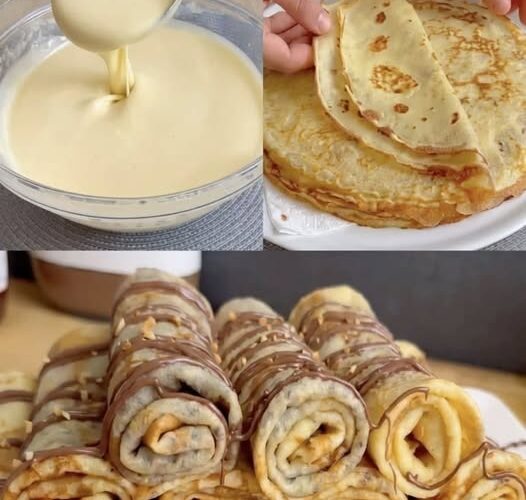
Zero-Carb Crepes Recipe
Zero-Carb Crepes are a delicate, flexible, low-carbohydrate alternative to traditional French-style pancakes, designed to closely replicate the soft, thin, and foldable structure of classic crêpes while removing flour entirely and relying instead on a carefully balanced mixture of eggs, dairy, and optional stabilizers that create a smooth, elastic batter capable of spreading into ultra-thin layers on a hot pan and cooking into tender, pliable sheets suitable for rolling, folding, or layering with sweet or savory fillings. To begin, prepare the batter by combining whole eggs as the structural base with cream cheese or soft full-fat cheese to provide body and creaminess, and add heavy cream to loosen the mixture so it becomes pourable; these ingredients should be blended thoroughly using a blender or immersion mixer until completely smooth and lump-free, because any small curds will cause uneven texture or tearing during cooking. For improved flexibility and reduced egginess, a small pinch of salt is added to enhance flavor balance, and optional flavoring such as vanilla extract for sweet versions or garlic powder, onion powder, or dried herbs for savory versions can be included, ensuring the crepe base remains neutral enough to pair with a wide variety of fillings. If a more structured and tear-resistant crepe is desired, a very small amount of psyllium husk or unflavored gelatin can be incorporated to help bind moisture and improve elasticity, though traditional zero-carb versions rely solely on the emulsification of eggs and dairy fats.
Once the batter is fully blended, it should be allowed to rest for several minutes so air bubbles naturally dissipate, which ensures a smoother pour and more even cooking surface, as trapped air can cause holes or uneven thickness in the finished crepes. Meanwhile, heat a non-stick skillet or dedicated crepe pan over low to medium heat, because controlled gentle heat is critical for preventing over-browning and maintaining flexibility; lightly grease the pan with butter or oil and wipe away any excess so the surface is only barely coated, allowing the batter to spread thinly without frying immediately on contact. Pour a small ladle of batter into the center of the pan and immediately tilt and swirl the pan in a circular motion so the mixture spreads outward into a thin, even layer, forming a nearly translucent sheet in some areas, which is essential for achieving authentic crepe texture even without flour. Cook slowly until the surface sets and the edges begin to lift slightly from the pan, indicating that moisture has evaporated and the structure has firmed enough to flip; then carefully slide a spatula underneath and flip the crepe gently, cooking the second side briefly just until it is set and lightly golden, taking care not to overcook as excessive heat will make the crepe rubbery instead of soft and pliable.
Repeat the process with the remaining batter, stacking each finished crepe on a plate and optionally covering them with a clean towel to retain warmth and moisture, which helps preserve their flexibility and prevents drying at the edges. As they rest, the residual heat allows slight steam retention, keeping them soft and easy to fold or roll without cracking. These crepes can be used immediately or stored in the refrigerator and reheated gently in a pan, maintaining their structure due to their high protein and fat content. Their neutral flavor profile allows for both sweet and savory applications: savory fillings may include scrambled eggs, cheese, smoked salmon, chicken, spinach, or creamy garlic sauces, while sweet variations can include whipped cream, sugar-free chocolate spreads, or low-carb fruit alternatives, making them highly versatile for different meal types. The final Zero-Carb Crepes deliver a surprisingly authentic crepe experience despite containing no flour, closely resembling traditional crêpes in softness and flexibility, while offering a rich, slightly creamy egg-dairy flavor, a tender melt-in-the-mouth texture, and a strong structural integrity that allows them to be rolled, folded, or stacked without breaking, making them a practical, satisfying, and highly adaptable base for low-carb, high-protein meals and desserts.
