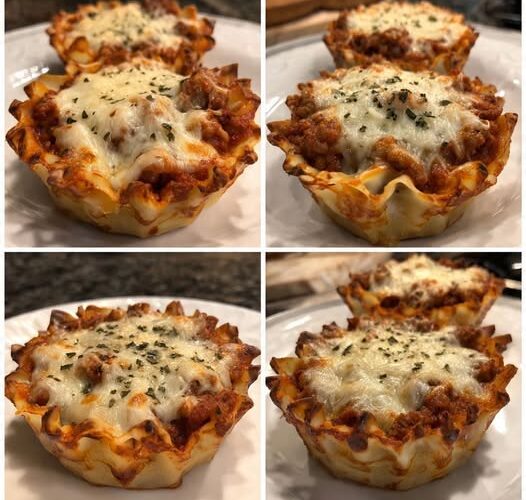
Lasagna Cups Recipe
Lasagna Cups are a modern, portion-controlled reinterpretation of classic Italian lasagna, designed to compress all the traditional layers of rich meat sauce, creamy cheese filling, tender pasta, and melted topping into compact muffin-sized portions that bake into crisp-edged, gooey-centered savory cups with multiple textures in every bite, making them ideal for serving, meal prep, or party-style presentation while still preserving the deep, comforting flavors of traditional lasagna. To begin, prepare a slow-cooked meat sauce by heating olive oil in a deep pan and gently sautéing finely diced onions until translucent and sweet, followed by minced garlic cooked just until fragrant, then adding ground beef or a beef-and-pork blend and breaking it apart thoroughly as it browns so no large clumps remain, allowing it to develop a rich, caramelized base flavor; once fully browned, season the meat generously with salt, black pepper, dried oregano, basil, and optional chili flakes for heat, then stir in tomato paste and cook it briefly to deepen its sweetness before adding crushed tomatoes or tomato sauce, reducing the mixture slowly over low heat until it thickens into a rich, spoonable ragù that holds its shape when layered and does not release excess liquid during baking. While the sauce simmers, prepare a creamy ricotta filling by mixing ricotta cheese with one egg to help bind the layers, along with grated parmesan for umami depth, chopped parsley for freshness, and a small pinch of salt and pepper, whisking until smooth yet thick enough to sit in distinct layers without collapsing into the sauce.
Next, cook lasagna sheets in salted water until just al dente so they remain slightly firm, then drain and lay them flat before cutting into small squares or strips sized to fit inside muffin cups, ensuring they can be layered without tearing or folding excessively. Preheat the oven and generously grease a muffin tin with oil or butter so the cups release easily after baking and develop slightly crisp, caramelized edges where the pasta touches the pan. Begin assembly by placing a small piece of lasagna sheet at the bottom of each muffin cavity, followed by a spoonful of meat sauce, a layer of ricotta mixture, and a sprinkle of shredded mozzarella cheese, repeating this layering sequence two to three times depending on cup depth to replicate the structure of full lasagna in miniature form, ensuring each cup contains balanced proportions of pasta, sauce, and cheese in every bite. As you build the layers, gently press them down so they compact slightly and hold together during baking, but avoid over-packing so the mixture remains light and not overly dense; finish each cup with a final spoonful of meat sauce topped generously with mozzarella and a dusting of parmesan, which will melt and brown into a golden, slightly crisp crust during baking.
Bake the lasagna cups in a preheated oven until the cheese is fully melted, bubbling, and lightly golden on top, the edges of the pasta turn crisp and caramelized where they contact the tin, and the internal layers become fully heated and fused together into a cohesive structure that still retains distinct separation between sauce, cheese, and pasta. During baking, the moisture from the sauce gently steams the pasta layers inside while the exposed edges crisp up, creating a dual texture effect that combines soft, saucy interiors with crunchy, baked edges. Once baked, remove the tray from the oven and allow the cups to rest for several minutes so the layers stabilize and firm slightly, which is essential for clean removal and structural integrity, then carefully lift each cup out using a spoon or knife if needed.
The final Lasagna Cups deliver a concentrated version of traditional lasagna where every bite contains a complete balance of savory meat ragù, creamy ricotta, stretchy mozzarella, and tender pasta, combined with lightly crisped edges that add contrast and structure, resulting in a rich, comforting, and highly satisfying handheld portion that feels indulgent yet neatly structured. The flavor profile deepens as the tomato sauce concentrates during baking, blending with the cheese to create a cohesive, hearty taste, while the compact format enhances caramelization and edge crisping, making each cup slightly different in texture from the center to the outer rim, and ultimately producing a restaurant-style presentation of a classic dish that is easier to serve, more visually appealing, and perfectly portioned without sacrificing the depth and comfort of traditional lasagna.
