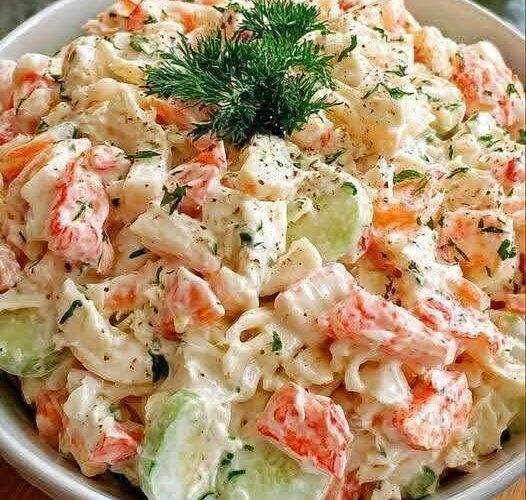
Russian Potato Salad
Ingredients (Serves 6 to 8 people)
Vegetables and base
- 4 to 5 medium potatoes
- 3 medium carrots
- 1 cup green peas (canned or boiled frozen peas)
- 4 to 6 dill pickles (firm, not soft or sweet)
- 1 small onion (optional, finely chopped)
Protein options (choose one or mix)
- 2 cups boiled chicken breast, diced
or - 2 cups boiled sausage or ham, diced
or - A combination of chicken and sausage for richer flavor
Binding and seasoning
- 1.5 to 2 cups mayonnaise (adjust according to preference)
- Salt, to taste
- Black pepper, to taste
Eggs
- 4 to 5 eggs, hard-boiled and chopped
Optional traditional or modern additions
- 2 to 3 tablespoons sour cream (for lighter texture)
- 1 teaspoon mustard (adds slight sharpness)
- A small handful of fresh dill, finely chopped
- 1 small apple, peeled and diced (adds sweetness in some variations)
Step-by-Step Preparation
1. Boiling the vegetables properly
The most important part of Olivier salad is how you cook the vegetables.
Wash potatoes and carrots thoroughly to remove dirt. Do not peel them before boiling because keeping the skin helps prevent water absorption, which keeps the texture firm.
Place potatoes in a pot of cold water and bring them to a boil. Cook for about 20 to 25 minutes depending on size. Carrots generally take 15 to 20 minutes.
Check doneness using a fork. They should be soft enough to pierce but not falling apart.
Once cooked, drain and let them cool completely at room temperature. For best results, refrigerate them for 30 to 60 minutes before cutting. This prevents the salad from becoming mushy.
2. Boiling and preparing eggs
Place eggs in a pot and cover them with cold water. Bring to a boil, then reduce heat slightly and cook for about 10 to 11 minutes for hard-boiled eggs.
Immediately transfer eggs to cold water after boiling. This makes peeling easier and prevents overcooking.
Once cooled, peel and chop into small, even pieces.
3. Preparing all ingredients
Once vegetables are completely cooled, peel the potatoes and carrots.
Cut all ingredients into small, uniform cubes. This step is important because the texture of Olivier salad depends on consistency.
Cut:
- Potatoes into small cubes
- Carrots into similar-sized cubes
- Pickles finely chopped
- Meat into small cubes
- Eggs into small pieces
- Onion very finely minced if used
Keep green peas whole.
Uniform size ensures every spoonful has balanced flavor.
4. Mixing the salad
Take a large mixing bowl. Add potatoes first, followed by carrots, peas, eggs, pickles, and protein.
If using onion, add it in small amounts because raw onion can easily overpower the salad.
Mix gently using a spoon or spatula. Avoid heavy mixing that crushes potatoes.
At this stage, the mixture should look colorful but dry before dressing is added.
5. Adding mayonnaise and seasoning
Add mayonnaise gradually instead of all at once. Start with one cup and mix. Then add more if needed.
The goal is to coat all ingredients lightly, not drown them.
Add salt and black pepper. Taste carefully because pickles and mayonnaise already contain salt.
If using mustard or sour cream, mix them into the mayonnaise before adding for even distribution.
The final texture should be creamy but not runny.
6. Chilling the salad
Cover the bowl tightly with plastic wrap or a lid.
Refrigerate for at least 1 to 2 hours before serving. However, the best flavor develops after 6 to 12 hours of chilling.
During this time, the flavors blend, the salad becomes more cohesive, and the texture improves.
Serving Instructions
Olivier salad is traditionally served cold.
It can be served:
- As a side dish with grilled chicken, roast beef, or fish
- As part of a festive meal spread
- With bread or toast
- As a standalone light meal
For presentation, it can be placed in a serving bowl and smoothed on top. Some people decorate it with chopped eggs, dill, or sliced pickles.
Taste and Texture Profile
This salad is known for its balance of textures and flavors:
- Creamy from mayonnaise
- Soft but firm from potatoes
- Slight crunch from pickles
- Sweetness from carrots and peas
- Savory richness from meat and eggs
Each bite contains a combination of creamy, tangy, and mildly sweet elements.
Variations
Traditional Russian version
Uses sausage or chicken, pickles, peas, carrots, potatoes, eggs, and mayonnaise.
Vegetarian version
Remove meat completely and increase peas or add boiled beans or corn.
Light version
Replace half the mayonnaise with yogurt or sour cream to reduce heaviness.
Modern gourmet version
Add mustard, fresh herbs, or roasted chicken instead of boiled meat for deeper flavor.
Sweet variation (less common)
Some households add diced apples or even a small amount of pineapple for sweetness.
Common Mistakes
- Cutting vegetables too large – ruins texture balance
- Mixing while vegetables are warm – makes salad watery
- Adding too much mayonnaise – makes it heavy and greasy
- Using soft pickles – causes mushy texture
- Not chilling before serving – reduces flavor quality
